

Tour season does not care if you are prepared. IEMs get dropped, stepped on, washed in jeans pockets, and slowly choked by sweat and mineral buildup — and none of it announces itself before show time. The musicians who survive a full run without a monitor crisis are the ones who treated prep as seriously as they treat soundcheck.
Here are five things to do before you leave.
1. Deep Clean Your IEMs Before You Leave

Sweat and wax build up inside the tubes and ports of your in-ear monitors over time. When sweat evaporates, it leaves mineral deposits on the acoustic filter screens which are tiny mesh screens inside the tubes that shape the sound. When those screens get clogged, you lose volume, lose clarity, or notice an imbalance between your left and right ears.
A thorough clean before tour eliminates that problem before it becomes a mid-tour emergency. Wipe down the shells, clean the cables, and vacuum the tubes with a headphone vac. If you have not sent your monitors in for a professional cleaning in the last year, consider doing it before you hit the road.
2. Stock Up on Backup Cables


Cables are the most failure-prone part of any in-ear monitor system. They flex and stress at the connector joints every time you move on stage. Drummers are especially hard on cables. A cable that worked fine at your last gig can fail at the worst possible moment during a tour run.
Pack at least two spare replacement cables per performer. If you are running a wired system, add an IEM extension cable — it gives you more range from your transmitter without putting stress on the short cable that ships with your monitors.
3. Bring a Travel Cleaning Kit
Post-show maintenance is the best thing you can do for the lifespan of your monitors. A quick wipe-down after every set keeps sweat off the shells and out of the ports. A headphone vac on the bus or in the merch bin means you can vacuum the tubes before the residue has time to crystallize.
Make it a ritual: IEMs come off, get wiped, get vacuumed, go in the case. Three minutes every night. You will thank yourself around week three.
4. Bring a Backup Set
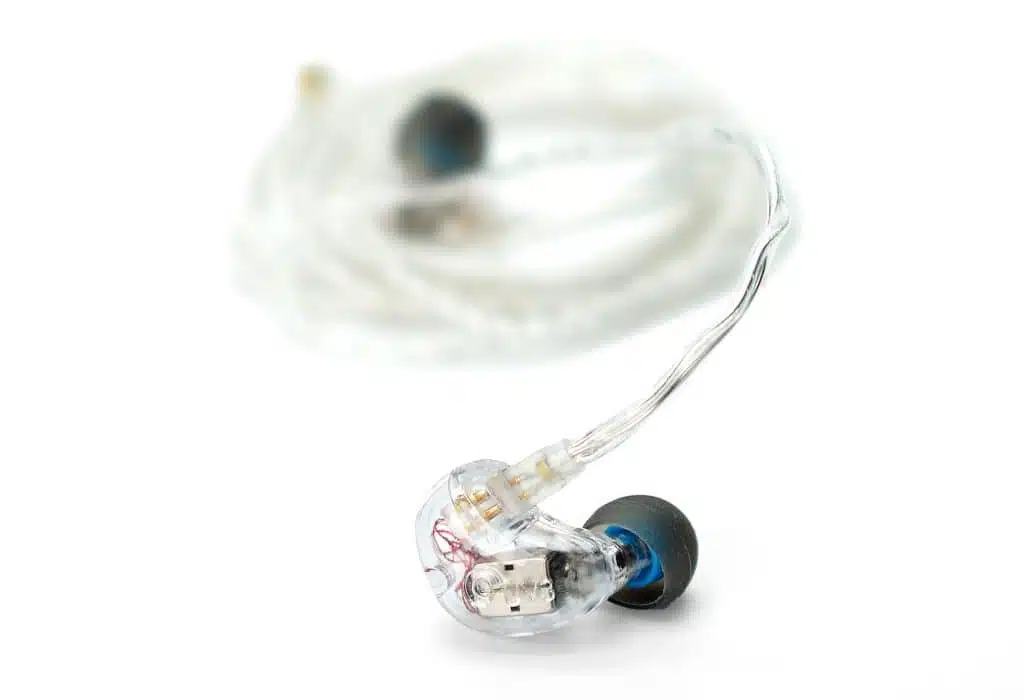
Tour life is hard on gear. Monitors get crushed in cases, dropped during load-in, and accidentally run through the laundry. You need a backup set — not because we think yours will break, but because when something breaks on tour, you cannot wait three to five days for a repair without missing shows.
A pair of UV2 or UV3 universal monitors works perfectly as a tour backup. Keep them with a handful of extra tips. When your customs go down, you have something to perform with while we rush your repair.
If you rely on your in-ear monitors to do your job, owning only one set is a risk not worth taking.
5. Invest in Off-Stage Hearing Protection

Your in-ear monitors protect your hearing while you are performing. They do nothing when you are standing side stage watching another act, loading out, or at the after-show. Concert volume on a loud stage can exceed 110dB — damage happens fast at that level.
Musician earplugs with filtered attenuation cut volume uniformly without muffling the sound. You still hear the show. You just hear it at a safe level. After a long tour, that difference adds up to years of hearing health.
Like anything in life, your success depends on how well you prepare. And when things go sideways anyway — we are here. Email sales@alclair.com, chat us on the socials, or call us. We want to get you back up and running as fast as possible.

